You’re looking for a 96V mid-drive motor for a hobby/performance-oriented electric motorcycle (light road, enduro, dirt) with a realistic target of 12 kW continuous and ~30 kW peak. At this power level, the right selection is not about chasing the highest number on a marketing sheet: it’s about choosing a motor that can sustain the heat load, integrates mechanically without risky compromises, and fits within a coherent ecosystem (FOC controller, sensors, drivetrain, DC power chain).
Summary
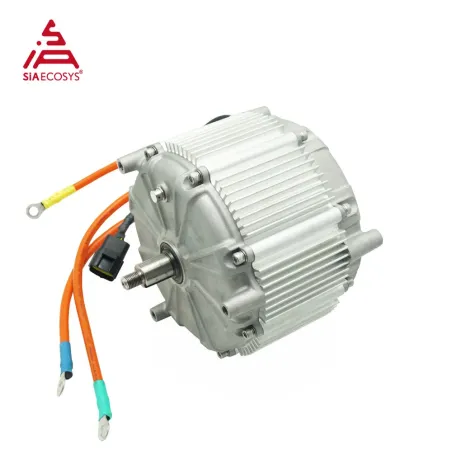
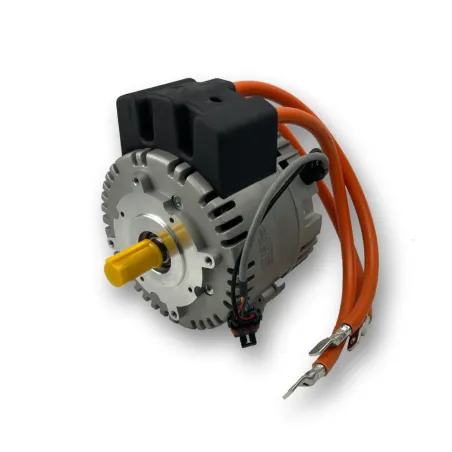
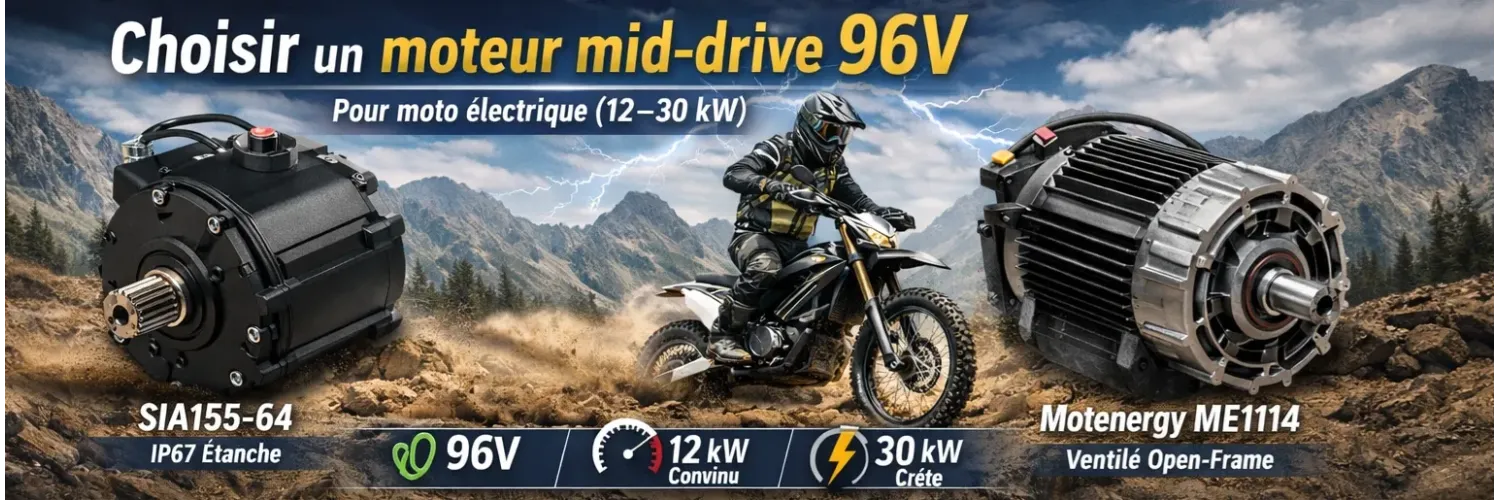
96V is a sweet spot for a 12–30 kW electric motorcycle: lower current, more manageable harnessing, reduced I²R losses, and an accessible ecosystem (BMS, contactors, controllers). Choosing a mid-drive motor typically comes down to five axes: 96V architecture, machine technology (PMSM / IPM PMSM), rigorous spec reading (continuous vs peak kW, continuous vs peak RMS current), thermal strategy (ventilation + derating, sealed vs ventilated), and system integration (shaft spline vs keyed, cabling, IP rating, sensors). A comparison illustrates typical choices: SiAECOSYS SIA155-64 (96V, 12 kW / 29 kW, IP67, encoder) vs ME1114 (96V, ventilated open-frame, 7/8" keyed shaft).
Why 96V for hobby/performance
96V is a common balance point because it reduces the current required for a given power level versus 48–72V (less Joule loss in cables, connectors, and the DC bus), while staying within a broadly available ecosystem (BMS, contactors, controllers). On a motorcycle, this translates into a harness and connectors that are easier to manage, lower I²R losses (therefore less “parasitic” heat), and more headroom for peak power without systematic oversizing—provided the DC chain is designed correctly (fuse, contactor, precharge). Watch-outs: loaded voltage (battery sag) and DC bus safety/reliability (precharge, protections) are non-negotiable reliability prerequisites.
IPM PMSM vs “classic” PMSM
At comparable power, the key differences are in control (FOC), loop stability, and the ability to hold torque in certain regions. PMSM: permanent magnet synchronous motor, very common in traction. With a properly sized and tuned FOC controller, torque control is stable, efficiency is high, and behavior is predictable. IPM PMSM (interior magnets): same family, often chosen for a torque/efficiency compromise and an interesting margin depending on the control strategy—especially for extended speed range if field weakening is correctly managed by the inverter.
- FOC is required to properly exploit a PMSM (and IPM) in traction.
- Sensors: sin/cos or encoder depending on the motor, and a temperature sensor is the baseline for controlled derating in performance use.
- Choosing IPM makes sense when torque stability, efficiency, and usable range (control) matter more than marketing figures.
Continuous vs peak kW, continuous vs peak current
This distinction is decisive. Continuous (nominal): the power the motor can sustain without overheating, representative of prolonged riding. Peak: power available for a short duration (acceleration bursts), limited by thermal constraints, the battery, and the controller. The same logic applies to current: continuous RMS current drives thermal sizing for the motor and the whole chain (cables, connectors, controller); peak RMS current is burst capability—useful, but highly dissipative.
Key point: you size the wiring for continuous, not peak. As an order of magnitude, phase conductors around ~13 mm² are consistent with ~125 A RMS under conservative assumptions. That does not imply the system can tolerate 300–420 A continuously without penalties: heating, increased resistance, voltage drop, reduced real torque/power, degraded overall efficiency, and connectors potentially becoming the limiting factor.
Mini comparison (96V): SIA155-64 vs ME1114
| Selection criterion | SIA155-64 | ME1114 (96V reference) |
|---|---|---|
| Continuous / peak | 12 kW / 29 kW | ~12 kW / ~30 kW |
| Continuous RMS current | 125 Arms | 125 Arms |
| Peak RMS current | ~302 Arms | ~420 Arms (≈ 1 min) |
| Max torque (order of magnitude) | ~85 N·m | ~65 N·m (order of magnitude based on Kt ~0.13 × 420A) |
| Ingress protection | IP67 | IP20 ventilated open frame |
| Sensors | encoder + KTY84/130 | sin/cos + KTY84/130 |
| Shaft | spline | 7/8" keyed |
| Typical use | Enduro/off-road wet use if integration is done properly | “Dry” performance, easy ventilation, DIY-friendly |
Quick read: enduro/mud/rain/washing: IP67 is a major argument, but thermal integration must be handled rigorously (a sealed motor makes airflow more critical). Ventilated open frame: dissipation can be excellent if air is truly available, but environmental protection becomes more demanding.
Cooling: sealed vs ventilated
Long-duration performance is primarily a thermal problem. A ventilated (open-frame) motor dissipates efficiently if air actually flows and often tolerates repeated bursts better, but it forces you to engineer environmental protection (water/mud/dust). A sealed IP67 motor fits wet off-road use, but its dissipation depends heavily on integration (fairing, hot-air pockets, proximity to heat sources, lack of airflow). In all cases, a derating strategy using a temperature sensor and controller is essential to preserve reliability and avoid abrupt cutoffs.
- Design a real airflow path (inlet/outlet) and avoid thermally confined zones.
- Use the temperature sensor for progressive derating rather than a hard cut.
- Treat environmental protection as a system function (covers, placement, splash management), especially with open-frame motors.
Integration checklist
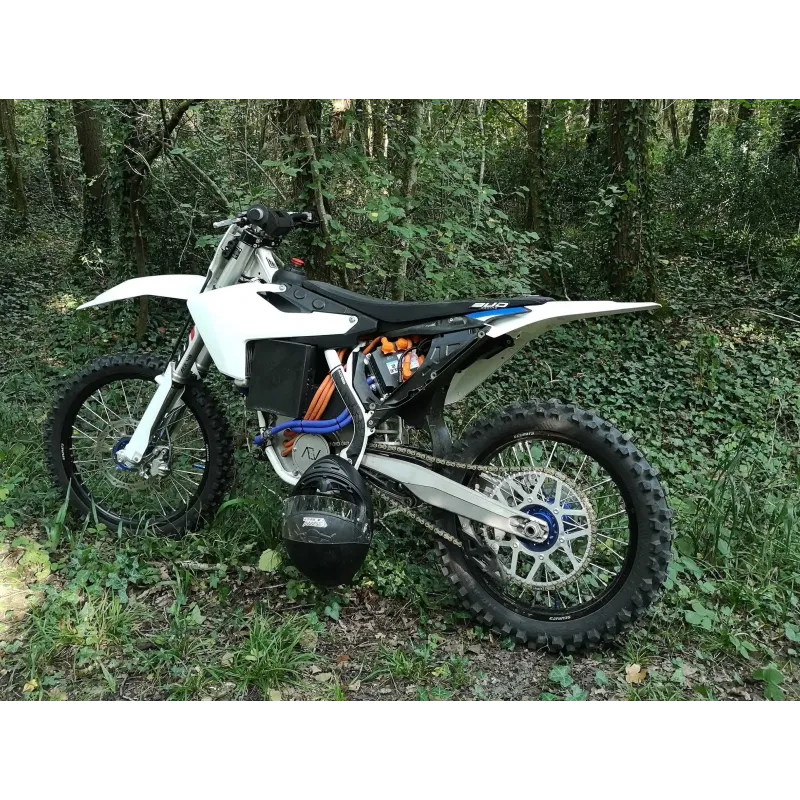
This is where the difference is made between a motor that looks great on paper and a reliable motorcycle. The critical points are drivetrain integration, wiring sized for continuous operation, control/sensor compatibility, and “IP” understood at the system level.
1) Drivetrain: spline vs keyed/smooth shaft
Shaft choice affects time-to-build as much as power. Spline: excellent mechanical strength for traction, an industrial standard; downside: sprockets/couplers are less “off-the-shelf” and often require adaptation/machining. Keyed shaft (e.g., 7/8"): very broad ecosystem (pulleys, sprockets), faster prototyping; downside: loads, alignment, and vibration durability must be secured.
2) Power wiring: size for continuous
Size the harness for continuous operation (stable temperature), then validate peak events for duration/frequency. Pay attention to connectors, crimps, and strain relief (vibration). Account for resistance increase when hot (losses, voltage drop, performance reduction).
3) Control / sensors
Verify controller compatibility with sin/cos or an encoder depending on the motor. Address EMC: power/signal separation, shielding, routing. Provide a degraded/safe mode in case of sensor loss.
4) IP: motor vs system
Even with an IP67 motor, connectors, cable entries, enclosures, and the controller are often the weak points. Think in terms of system IP, not just component IP.
Final block: which motor for which project
Wet enduro/off-road project: a sealed IP67 solution is generally the most rational, provided thermal integration is addressed (airflow + derating). “Dry” performance project: a ventilated open-frame motor can be very effective and easy to cool, at the cost of designing an environmental protection strategy.
Compatible accessories
The accessories below showcase a selection of components commonly integrated and/or recommended with FAQ: Choosing a 96V mid-drive motor for an electric motorcycle (12–30 kW) – integration method to optimize installation, compatibility, and overall performance.
| Category | Accessories |
|---|---|
| BLAC MOTORS |
Key takeaways
- At 12–30 kW, 96V reduces current and stabilizes real-world performance (harness, losses, thermal behavior).
- Motor choice is as much about the ecosystem (FOC, sensors, drivetrain, DC chain) as about advertised kW.
- Continuous = sizing; peak = transient performance, to be governed by thermal management + derating strategy.
- Spline vs keyed: mechanics can dictate time-to-build as much as power.
- IP67 suits wet use; open-frame dissipates well but requires environmental protection design.
Articles
Discover below our dedicated articles, featuring detailed answers to the most common technical questions, along with in-depth information to help you better understand installation, compatibility, use, maintenance, and warranties.
| Category | FAQ / Article(s) |
|---|---|
| ELECTRIC CONVERSIONS | |
| FAQ: VARIABLE SPEED DRIVES (LV traction controllers / inverters) | |
| FAQ : ELECTRIC CONVERSION KITS | |
| FAQ : ELECTRIC MOTORS |
Product related to FAQ: Choosing a 96V mid-drive motor for an electric motorcycle (12–30 kW) – integration method