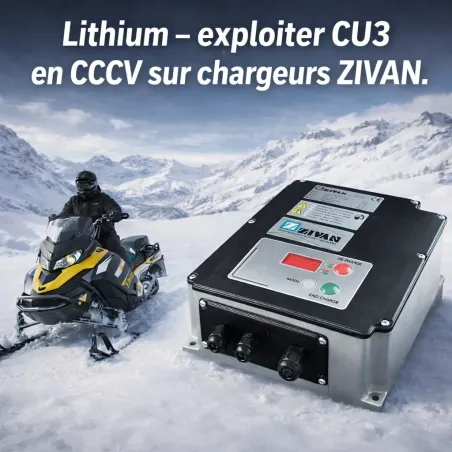
In our Battery Charger FAQ, you will find answers to common questions about selection, configuration and system integration of chargers for electric conversions, industrial vehicles and machines. The goal is to make charging reliable, reduce architecture mistakes, and ensure compatibility with your battery technology (lead-acid or lithium) and operating environment.
This FAQ typically covers:
- Charger selection: system voltage (e.g., 48–96V), charge current, power, onboard vs workshop usage, AC supply constraints.
- Lead-acid vs lithium: charging strategy differences, battery life impact, end-of-charge criteria.
- Lithium CC/CV (CCCV): current/voltage settings, end-of-charge thresholds, best practices to avoid over-voltage, oscillations or unwanted cut-offs.
- Communication & supervision: CAN / CANopen, BMS integration, diagnostics, timing requirements and behavior on communication loss (depending on modes/firmware).
- Onboard integration: IP rating (e.g., IP65), airflow/ventilation, thermal design, mounting, vibration, EMC considerations.
- Wiring & protections: cable sizing, voltage drop, fuses, contactors, and DC safety chain consistency.
- Maintenance & diagnostics: reading states/faults, using data logging, field troubleshooting methods.
Whether you are selecting a charger or validating an integration, this FAQ provides a system-level framework for stable, repeatable and safe charging.